Brew Fusion
Espresso Burundi Kibingo Lavado
Espresso Burundi Kibingo Lavado
Aromas of stone fruit and dried fruit with notes of nectarine and apricots, and sweet, balanced flavors with hints of honey and dates.
Couldn't load pickup availability
ESPRESSO - 250g
CATEGORY: Special Espresso
VARIETY: Red Bourbon
ALTITUDE: 1700 - 1900 MASL
PROCESS: Washed
HARVEST: March - July 2023
NOTES
Honey
Dates
Nectarine
Roast Date: 04/06/2024
Traceability
Traceability
The Kibingo washing station is located in the Kayanza region of northern Burundi. The station itself is located 1,893 meters above sea level. The altitude of the farms on the neighboring hills that supply the washing station varies from 1,700 to 1,900 meters above sea level.
Kibingo serves 1,739 registered coffee producers who are spread across 18 hills in the area. All producers registered at a Greenco wash station are organized into groups of 30 people, led by a farm leader. This leader acts as a spokesperson to facilitate communication and organization with the wash station.
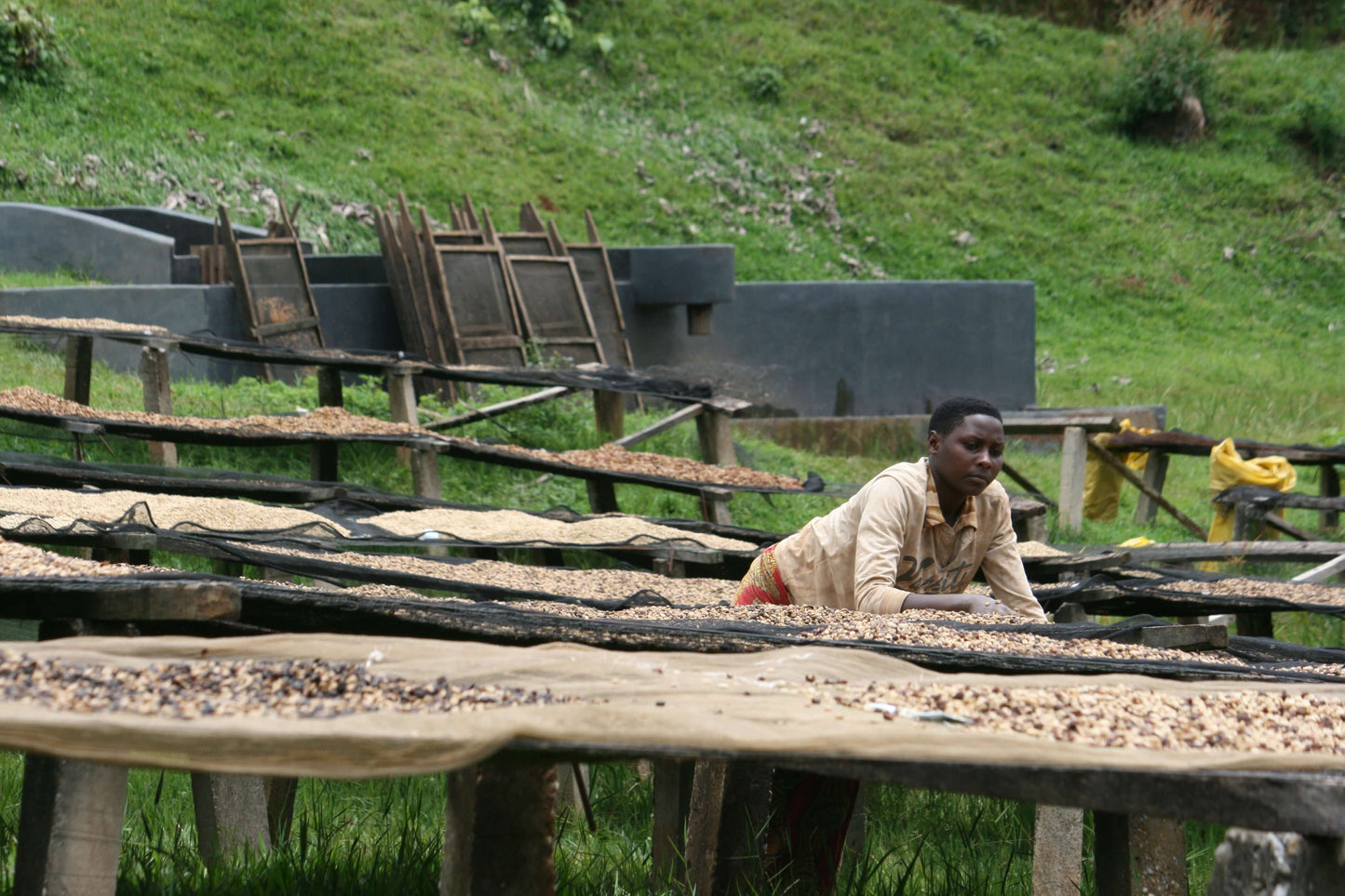
The washing station is equipped with 10 fermentation tanks, 2 soaking tanks and a drying field with 165 drying tables and 4 pre-drying tables. Kibingo can process 750,000 kg of cherry per day.
The wash station is involved in several agricultural extension and support projects for farmers, including a livestock breeding project and a variety of Farmer Hub projects focused on strengthening cooperatives and improving yields.
Description
Description
Process
During the harvest season, all coffee is selectively picked by hand. Most families only have 200 to 250 trees, and they do the harvesting almost entirely themselves.
Quality assurance begins as soon as farmers deliver their cherries. The cherries are wet processed under constant supervision. Pulping, fermentation time, washing, sorting into carcasses and a final soaking are closely monitored. All cherries are floated in small cubes as a first step to check quality. After flotation, the highest quality cherries are re-sorted by hand to remove all damaged, unripe and overripe cherries.
After sorting, the cherries are pulped within 6 hours of delivery. The machine can process up to 3 tons of cherries per hour. During pulping, cherries are separated into high and low quality by density in a 3-disc Mackinon gin fitted with an additional separating disc. The coffee is then fermented in water from a nearby stream for 10 to 12 hours, depending on ambient temperature. A small sign on the fermentation tank keeps track of each batch. The sign mentions the name of the washing station, the date the cherries were purchased, the grade of the grain, and the time fermentation began. Trained agronomists check the beans by hand regularly to ensure fermentation stops at the perfect time. Station workers grind the parchment for 30 minutes in the fermentation tank. This grinding process helps remove the mucilage from the parchment.
After fermentation, the coffee passes through washing and classification channels. As the grains flow, wooden bars placed along the channel prevent grains of specific densities from passing through. These bars are spaced along the channel. While the first block stops the densest grains, the next one is arranged to stop the second densest grains, and so on. In total, the channel separates the grains into seven degrees according to density. After washing, this parchment is poured into wooden trays or nylon bags and taken to drying tables, each in its separate quality group. Each tray and parchment nylon bag retains its traceability label with all the information.
The parchment is placed on raised beds to dry. Pickers check dried beans for damaged or defective beans that may have been missed in previous quality checks. Typically each table holds 800kg of parchment. At the peak of the season, the maximum load for a table is 1000 kg. Each table has its traceability label with batch information. The parchment is left to dry from dawn to dusk and covered with a sheet at night or when it rains. During this time, the scroll is rotated regularly. The humidity level is carefully controlled and any parchment with visual defects is removed.
Recipes
Recipes
When it comes to replicating the recipe, there are different variables that can interfere with the final result of your cup, such as the roasting date, conservation of the beans, environment, water, state of the machinery, etc. It is important to keep in mind that all these factors can influence and you may have to make small adjustments when replicating this recipe.
Recipe
16.8 gr dry
41.5 gr in liquid
28 seconds
Machine: Sage, Barista Pro
Grinding number: 15
Grinding time: 11
Recommended mineral water: Lanjarón
TDS and extraction percentage: 9.20% / 23.67%
https://vimeo.com/946616200
Compartir